
How to get prepared: Go bag
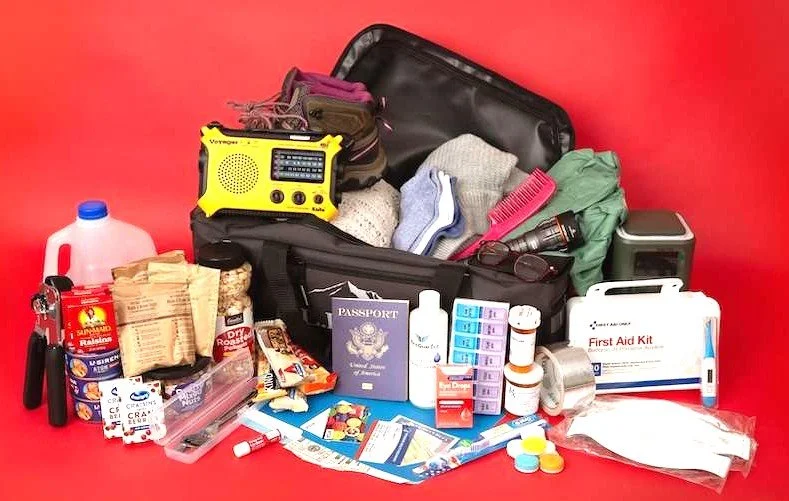
A well stocked go bag will carry you through three days away from home.
Your “go bags” are kept packed and ready at hand for a quick three-day evacuation out of the region. Since they are likely stored at your home, your go bags are part of your home supplies. You do NOT need to duplicate gear purchases for both your home and your bag, but keep in mind the wisdom of redundancy when considering key items that could make life difficult if they were lost or broken without an available replacement (such as a can opener).
If you work off island or otherwise leave the island frequently, you might consider having a “stay away” bag stored in your car with supplies similar to your go bag. If a disaster happens on the island, leaving you unable to return, where will you go? What will you need to have with you by way of personal supplies, documents, weather protection, food, and so on? The contents may be very similar to your go bag but in this case you will have them in your car any time you leave the island.
General guidelines
Each member of your household, including pets, should have a go bag.
Do NOT assume that you will have a working automobile or passable roads. You should be able to carry your go bag.
Balance loads for weight and content across all bags. For example, don’t place 100% of the food in a single go bag.
Consider including highly visible reminder notes for items kept elsewhere, such as important documents, extra keys, sleeping bags, your phone charging cord, and such. You want to be able to locate and grab them quickly when faced with a level 3 evacuation order.
After you have assembled your go bag, make a list of what’s in each bag, or take a picture or each bag and its contents. Remember that your go bag contents are the same items in your home supply checklist. Store your go bags at your best point of exit: in a closet by the front door or near your vehicle.
Add to the lists below items specific to you and your loved ones, such as medicines and assistive devices (such as oxygen).
Essentials to consider
Water
An amount you can carry in collapsible water bottles or hydration bladder
Water purification methods, such as purification tablets or a small hand pump
Portable water filter (LifeStraw, Sawyer Mini, or similar)
Food
Be sure any food you pack is something you will want to eat. Suggestions for a 3-day supply of non-perishable, nutrient-dense, ready-to-eat food:
Energy/protein bars
Nut butter pouches
Dried fruit, nuts, jerky
Instant soups or freeze-dried meals
Hygiene and sanitation
Wet wipes & hand sanitizer
Toilet paper in waterproof pouch
2 trash bags, 5 large zippered bags and plastic ties (for human waste)
First aid and health
Small first aid kit supplemented with these items:
Quick Clot or Celox wound treatment
Trauma pads
Athletic tape
Betadine
Disposable gloves
Tweezers and small scissors
Blister care (Moleskin or blister pads)
Pain relievers, antihistamine, electrolyte tablets
Medications, minimum 7-day supply
P100 mask in case of wildfires
N95 mask for smoke, dust, mold and infectious disease
Glasses, contact lenses with solution
Hearing aids with backup batteries
Personal hygiene and comfort items (menstrual products, lip balm)
Cash and extras
Small bills and coins (ATM’s and store computers may be down)
Spare keys (house, car, storage)
Photos of family members and pets (for identification if separated)
Comfort items: book, playing cards, small puzzle, and such, especially if you’ll have small children with you
Tools
Manual can opener if you pack canned food
Lightweight mess kit or utensils
Multi-tool or Swiss Army knife
Lighter or waterproof matches
Navigation and communication
Battery-powered or crank NOAA weather radio
Cell phone with chargers and/or solar charger
Signal whistle
Laminated local maps with marked evacuation routes
Compass
Printed emergency contact lists (neighbors, family, county emergency numbers
Notepad and pencil
Waterproof pouch for important documents or a USB (thumb) drive
ID
Insurance
Home photos for claims
Medical information
Lighting and power
Headlamp (hands-free)
Small LED flashlight (water resistant)
Glow sticks
Extra batteries stored outside of flashlights
Clothing
Work gloves
Sturdy shoes
Complete change of sturdy clothing including long sleeve shirt, long pants
2 pairs of socks
Eye protection
Sunglasses
Safety goggles
Weather protection
Adjust according to the time of year
Rain jacket or poncho
Cold weather jacket, gloves, hat, scarf, wool socks
Sun hat, sunscreen, bug spray
Waterproof insulated shoes or boots
Pet gear
Sturdy leash, harness, collar with ID tags
Collapsible water bowl
Minimum 3-day supply normal food and medications
Possible extras
Consider these if travel by auto is available.
Backpacking stove with fuel canisters
Sleeping bag or 2 Mylar blankets and duct tape to make an emergency bag
Tarp with 100 feet of paracord to secure it overhead for a tent
2nd tarp to spread on the ground
Two-way radio (store batteries outside the unit)
Folding shovel
Saw
Crates for your animals to feel secure and safe amid the chaos
Read more
|
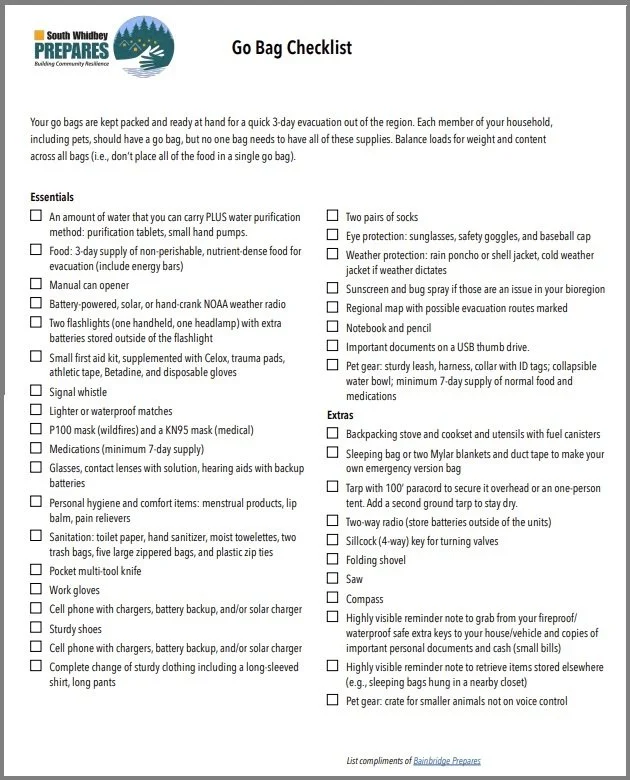
Printer-ready checklist of essentials, a great list to start with |
|
Prepare in a year: Go bag |

|
How to get prepared: Emergency preparedness for pet owners |
Let’s talk
Do you have helpful information to add? Or perhaps a question you’d like to pose to this community? Use the comment box below.