
How to get prepared: Energy and transportation
We islanders are all-too-familiar with coping with power outages lasting hours or even days. But are you ready for a months-long outage? If the power is out for weeks or months, you may need alternative sources to heat your home, refrigerate and/or cook food, and transport yourself and supplies.
Home heating
If you will have a warm house during an extended power outage, consider opening your home to someone without a heat source. If you don’t have a back-up source of heat, reach out to nearby friends. You may be able to work out a trade (a warm space for food, water, or some other necessity) that feels fair to all.
Wood-burning stoves
Questions to ask yourself if you’re planning to rely on a wood-burning stove during an extended outage:
Do I know where to source wood for fuel? How about tinder and kindling materials? Matches?
Do I know how to safely start and maintain a fire in my stove or fireplace?
Propane fireplaces
Propane-fueled fireplaces can be great as long as your propane lasts. Conserving will be important if fuel trucks may not be able to refill your tank for weeks.
Home cooking
Placing pots or pans of food or water on indoor wood-burning stoves may be adequate for heating food, melting snow or ice, or even bringing water to a simmer if you have a lot of patience.
Propane-fueled stoves and barbecue grills are good until the propane runs out. After that, consider these options:
Charcoal or wood-burning grill
Rocket stove
Fire pit with a grill or large fireproof pot
Be sure that cooking with any of these options is done outside. Inside use can lead quickly to carbon monoxide poisoning and even death.
Other household electricity
Generators
A generator fueled by propane or petroleum products (oil, diesel) is effective as long as your fuel lasts. But it’s also terribly noisy and polluting. Running a generator for days and weeks on end may not be viewed as kind by your neighbors.
If you have a generator, minimize nonessential electricity use and run the generator only when necessary to conserve fuel, which will also reduce unwanted noise and pollution. For example, consider running your generator to power a freezer every other day to conserve fuel. A full freezer can stay cold 24 or even 48 hours as long as it’s not opened, not even “just to check.” As freezers become less full, pair up with neighbors by putting everything into one freezer to conserve even more.
Solar-powered batteries
Battery options don’t need to collect dust in a corner waiting for a big disaster. You can get benefits during our familiar shorter power outages and even every day.
Some portable battery packs and power stations, such as Jackery, can be recharged via portable solar panels. These panels may provide enough electricity to power a refrigerator or freezer, and perhaps a phone, radio, or other small appliance on sunny days. They can supplement your regular energy use even when the grid is operating, saving you electricity and money. Just be sure to top it off often so you have a full battery when you really need it.
Rooftop solar panels with battery back-up provide the most lasting and neighbor-friendly option. Even on short, rainy, winter days, panels may provide enough electricity to power a refrigerator or freezer. Depending on the size of a solar array and the battery backup, you may have more electricity than you can use while the sun is shining, perhaps even powering an electric vehicle for short trips or allowing you to share your extra electricity with a neighbor or two. Note that solar panels tied to the grid will not provide power during a power outage unless they are connected to a backup battery. And most battery systems do not run appliances that produce heat, including wall heaters, ovens, water heaters, dryers and such.
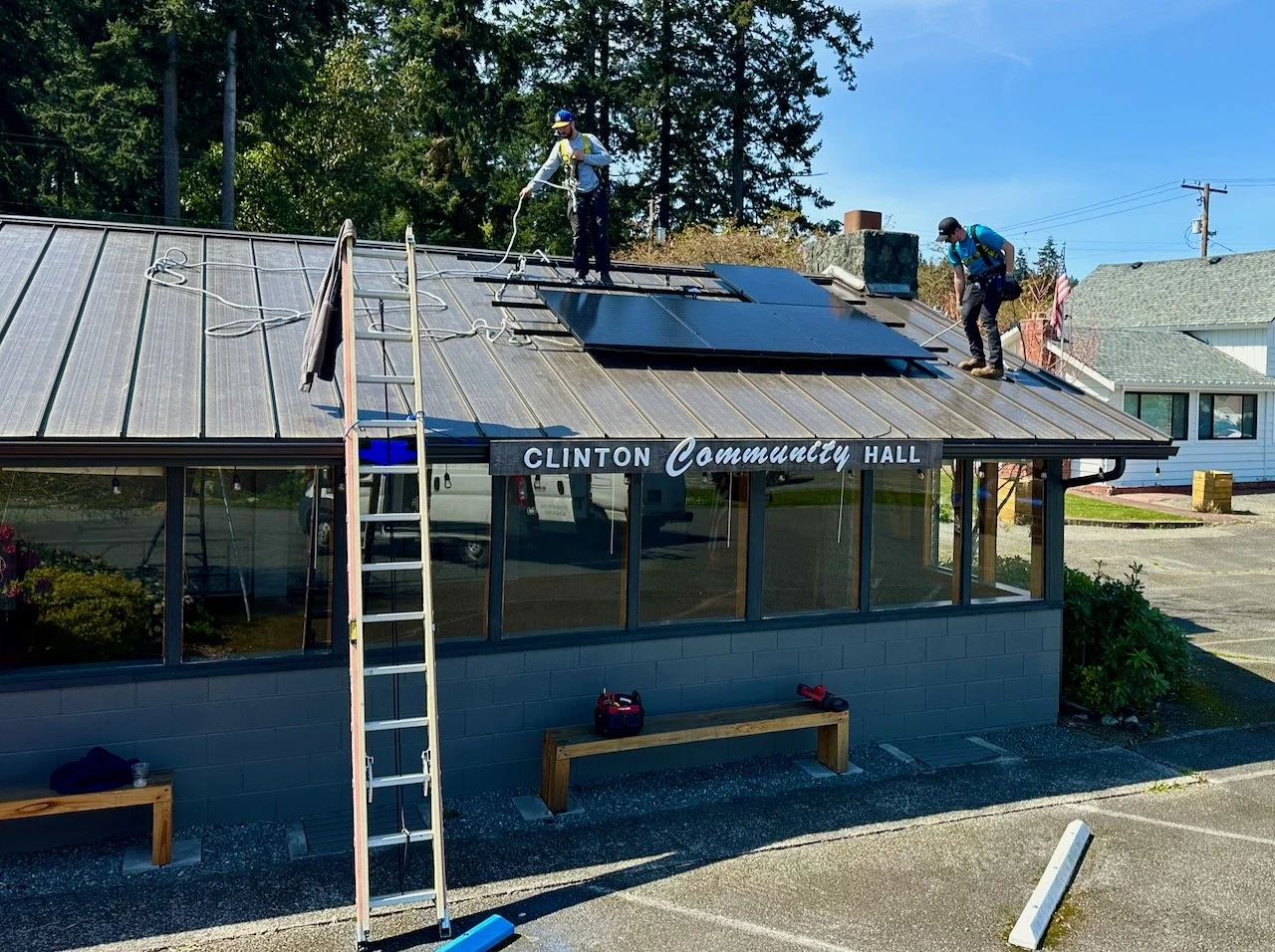
Solar panels and a back-up battery at the Clinton Community Hall provide electricity during outages.
Candles or lanterns
Candles provide some light and a small amount of heat. But safety is a key issue! Whole houses have burned to the ground ignited by one unattended candle.
Battery-powered lanterns are great—but be sure to stock lots of batteries. Small solar chargers for rechargeable batteries are inexpensive but need several hours of direct sunshine.
Solar-powered lanterns, such as Luci Solar Lanterns, provide bright illumination for six hours, and some models can power a phone.
Wind-up gadgets
Wind-up radios, flashlights, phone chargers—and combination gadgets—are available at camping supply stores, online, and perhaps at local hardware stores.
Transportation
Roads and bridges may be undrivable, and gas stations will be depleted or inoperable without electricity to run pumps. How will you get around?
Walk
Walking is the most low-tech way to get around. No special equipment is needed beyond a pair of sturdy, comfortable shoes. Winter walking may also require warm, waterproof clothing, a reflective vest or bright clothes, and a flashlight.
If you can walk, but aren’t in the habit, consider building your walking capacity before disaster strikes. Begin by walking a bit more than you are used to. If you typically walk less than a quarter mile a day, aim for a quarter mile several times a week. If you can walk a mile, try a mile and a half. Then every two weeks, increase the distance by 10 to 20%. Think about what amenities are within walking distance. What destinations can you start walking to regularly?
If you aren’t able to walk safely and comfortably, see if you can buddy up with a neighbor who is able to get around and bring you information and supplies.
Bicycle
While not for everyone, bicycling can get you further than walking in the same amount of time—as long as land surfaces are even enough and flat enough to allow you to ride. Hills are not a challenge for electric bikes, but you’ll need a way to charge the battery.
Electric vehicle with an independent electricity source
If you have an electric vehicle and solar panels with a large enough battery backup, you may be able to drive your vehicle wherever roads are drivable.
If you have only one half of this combination—only an electric vehicle or only solar panels with a battery—consider pairing up with a neighbor who has the other half. You’ll both benefit!
Kayak or rowboat
If you’re close to water and know how to operate a small boat safely, a kayak or rowboat may allow you to get to people or places more easily than land travel. After all, before Whidbey Island had a robust road network, people traveled mostly by boat.
Sailboat
A sailboat that can haul supplies for a whole neighborhood could be a godsend.
Horse
If you have a horse that can transport one or more people, consider offering transportation to your otherwise stranded neighbors who know how to ride safely.
Let’s talk
Do you have helpful information to add? Or perhaps a question you’d like to pose to this community? Use the comment box below.