Communications
Whether as simple as walking to an information hub on your street or as complex as joining a radio network, preparing for two-way communications when the phone lines and towers may be down is essential to knowing how to proceed in any crisis.
Disaster alerts
Alerts from county, state or federal agencies can give us all a heads-up on an impending disaster, whether a storm, an earthquake or a wildfire.
See Alert Apps
Neighborhood phone trees
After disaster strikes, knowing the current situation, what to expect, and what to do is key to taking appropriate action. Organizing old-fashioned phone trees or assembling phone numbers for group texts gets your neighborhood ready to communicate. Remember that not everyone has a mobile phone, so some land-line calls may be needed in addition to group texts.
Neighborhood communications hubs
If phones aren’t working, having a designated information hub within easy walking distance of each person in your neighborhood will be the most effective way to share information. The hub may be someone’s garage, a tent, a bulletin board, or some other place where people can get information. Large neighborhoods may need more than one hub, with communication among hubs. Find out before a disaster where your neighborhood hub will be.
People who aren’t able to walk to an information hub will need a designated buddy who will bring information to them. Prepare for buddies ahead of time, although you may need to adjust after you assess injuries and absences.
Radio communications
Use of radios in neighborhood emergency response
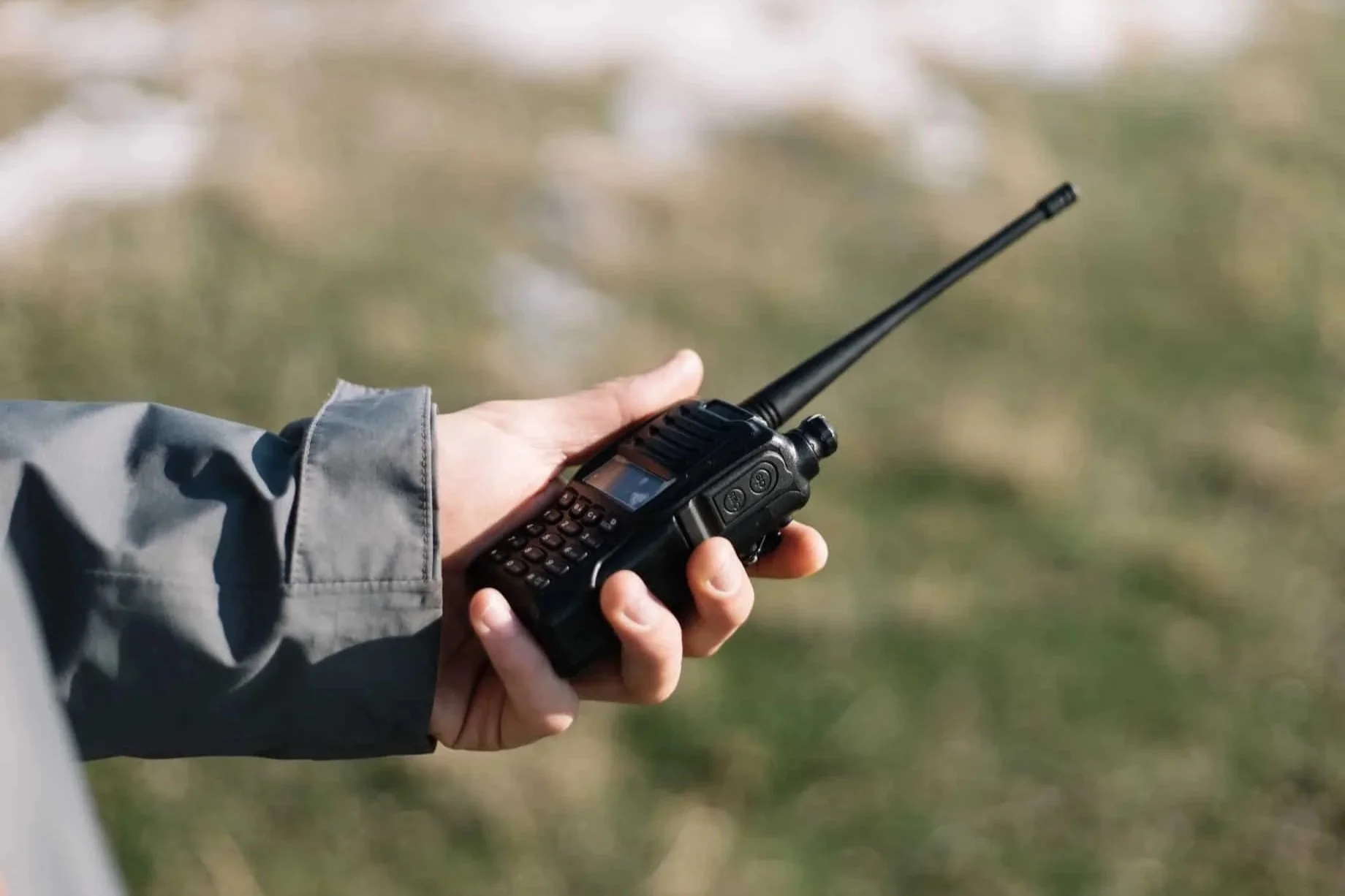
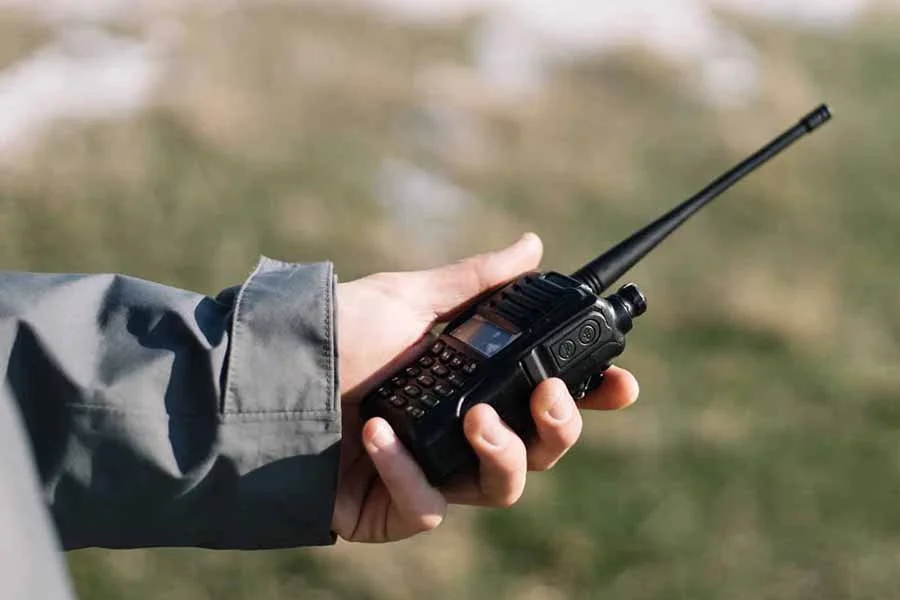
Radios of various types can be a useful tool to help coordinate a neighborhood’s response to a disaster. FRS radios (walkie-talkies) are inexpensive and allow neighbors to communicate with each other over short ranges. Hand-held GMRS radios are slightly more expensive but allow communication over longer distances. Amateur radios (such as ham radios) allow a neighborhood to communicate over very long distances and, for example, exchange information with the Island County Emergency Operations Center (EOC), communicate with distant neighborhoods, or send status reports to friends or relatives in other states.
Here's what it looks like when all the pieces are in place:
-
These recommendations are based on the radio team’s research.
You may of course purchase whatever you like. For consistency with other neighborhoods so we can support each other’s learning curve we recommend a Btech GMRS-V2 handheld model.
-
FRS Radio
Low powered Family Radio Service
Inexpensive hand-held “walkie-talkies”
22 channels
Requires no license
Easy to use
Allows neighbors to keep in touch with each other over moderate distances (~a couple miles depending on terrain)
You can of course purchase whatever you want. For consistency with other neighborhoods so we can provide mutual aid learning these tools, we recommend the Motorola T470.
-
Higher powered General Mobile Radio Service
Allow communication over longer distances
Good for communications between neighborhoods
Same 22 channels as FRS
Allows use of external antennas
Allows use of “repeaters”
License required (no test; $35 fee; apply on-line)
-
Amateur radios (such as “ham” radios)
Allow communication over very long distances—to the County Emergency Operations Center or out of the area, such as to relay “I’m ok” messages for families
Hand held and mobile configurations are available.
FCC license required (2-day class, on-line study sites)
Radio communications additional information
A Beginners GMRS Radio Course: BTECH GMRS-V2 radios. This handout will get you started using your radio.
The booklet Use of Radios in Responding to Neighborhood Emergenciesdescribes how to choose appropriate radios, how to use those radios, and how to integrate a number of radio operators into an efficient “net” that can coordinate radio traffic within a neighborhood as well as communicate with other operators outside the neighborhood.
Island County Auxiliary Communication Service (ICACS) is a group of ham radio operators involved with emergency communication in Island County. The Neighborhood Support Group within ICACS stands ready to assist neighborhoods with all issues related to radio use. This can include assistance in selecting appropriate radios, programming those radios, “mapping” a neighborhood to determine how best to ensure all neighbors can communicate with each other, etc. Read more: ICACS Emergency Communications Support/Services for Neighborhoods within Island County.
The ICACS Neighborhood Communications Development Plan flyer gives you top-level information from getting organized before you purchase, to purchasing and getting the communications set up from local to integrated.
The ICACS Radio Selection Document Trifold is a great reference to help you know which radio will work best for you and your neighborhood. It is set up as a trifold flyer, front and back. Champions, feel free to print copies for your neighbors.
Communicating with loved ones
Family and friends outside a disaster zone may need to hear from you and communicate with you. Be sure you have contact information available other than on your phone, which may not be working. You may want to designate one person that you get messages to, and they relay messages to others.