
How to get prepared: Provisioning food
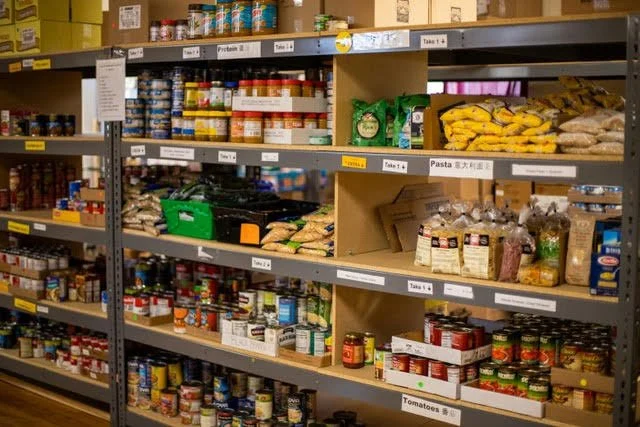
Okay friends. Let’s talk about food.
When a real disaster hits our island we could be on our own for weeks. Ferries may not run. Stores may not restock. And if it’s winter, your garden is probably giving you…what? So the real question isn’t if you’ll be inconvenienced. It’s what will you and your family eat? And yes—that includes your pets, your chickens, your goats, and the cousin who came for the weekend and is now unexpectedly “local.”
Build toward 30 days (don’t panic)
Plan to store enough food and water for your family for three days. As you feel able, extend the storage to cover two weeks, and then finally to 30 days. Preparedness isn’t fear. It’s hospitality—for your future self. When the lights flicker and the ferries pause, you’ll be the calm one saying, “Come on in. We’ve got dinner covered.”
Store what you love. Eat what you store.
Every family is different. Allergies, preferences, picky eaters, athletes, toddlers—you know your crew.
The golden rule: Store what you eat. Eat what you store. Rotate regularly. Focus on
High-calorie
Shelf-stable
Nutrient-dense
If you want a ‘stocking blueprint,’ think about what you would eat for a week if you did NOT have access to your refrigerator or freezer. (Those of you who backpack already know how to do this!) Think in terms of quantities and types of proteins, vegetables, fruits, grains, seasonings, fats and sauces, and perhaps dairy and treats. Now, take those quantities and multiply by 4—that should give you a 4-week supply for yourself. Multiply this by the number of people in your household, and that will give you a 4-week supply for everyone. We do recommend you include variety in your choices. You may love canned chili, but probably not for 30 days in a row. Your taste buds and body will feel better with a healthy variety.
Some companies specialize in long-term storage foods, such as ReadyWise, Mountain House, BePrepared.com, and cascadiaready.com. They’re convenient and long-lasting (though pricier). Even if you don’t buy from them, browse their websites—it’s like window shopping for the apocalypse. You’ll get great ideas.
If you still feel overwhelmed and just want a list, our Food Resilience Working Group has compiled some suggestions in each category below. Plan for food and water for infants and those with special health needs. And don’t forget your pets.
-
Canned meat, chicken, turkey, seafood and other protein-rich foods such as beans, nuts and nut butters. Should have enough for 5.5 ounces per person per day.
Options (per person/day).
1 5 oz can meat, fish, chicken, turkey
1 15 oz can beans
Keep nut butters and nuts on hand. 1 tablespoon peanut butter or 1/2 ounce nuts is equivalent to 1 ounce meat.
-
Canned vegetables and canned vegetable juices—should be enough to provide about 2.5 cups/day/person.
-
Canned fruits and fruit juices—enough to provide about 2 cups/day/person. Keep dried fruit on hand: 1/4 cup dried fruit = about 1/2 cup canned fruit.
-
Ready to eat cereal, crackers, pretzels, instant oatmeal or other non-perishable grain products (granola, granola bars) that don’t require cooking. Should be enough to provide 6 ounces of grain equivalent per day per person. 1 ounce = 1 cup ready-to-eat cereal or 5 whole-wheat crackers.
-
Nice to have on hand: other nonperishable items such as these:
Canned chili, soup, or spaghetti
Trail mix
Instant pudding
Salt, pepper, and other seasonings
Cookies or candy.
Storing food
Store food in a cool, dry place where it won’t freeze, overheat, or become a rodent buffet. Think: tidy and protected. Remember to store extra water if you’ll need to to rehydrate or cook dried foods, including pasta, rice, or dehydrated soup.
Choose food that:
Has a long shelf-life.
You and your family like and usually eat. This makes rotating your food storage according to expiration dates much easier for you, because you will be able to use the food that is close to expiration.
Is easy to prepare (could be eaten at room temperature or heated in a pot using a portable gas stove or “rocket stove”, barbecue, etc.). Some pouches that are intended for use in a microwave also have directions for heating on a stove.
Mark each food item with the expiration date. Once or twice a year, move food that is close to expiration to your kitchen to use or donate to food bank (they can often use it after expiration). Replace it with new food for storage, remembering to date it for expiration.
Store your emergency food away from your kitchen. This helps avoid using the food in a non-emergency without replacing it. You might consider storing it away from your house in moisture-proof and animal-proof containers. If this is not possible, consider your garage or shed. Remember to stockpile food for pets!
A word about earthquakes
We live in earthquake country. Cans are sturdier than glass. If you store food in glass jars, keep them packed tightly in bins or boxes to improve their odds during a serious shake. Nothing says “hard day” like cleaning marinara off the pantry floor in the dark.
Cooking during a disaster
How will you cook?
Camp stove (with fuel?)
Barbecue (with charcoal?)
Rocket stove (with twigs?)
A rocket stove is worth considering—it burns small branches and twigs, which we have in abundance. No butane required.
Also ask yourself: what’s the minimum cookware you truly need? One sturdy pot. One pan. A sharp knife. A stirring spoon. A can opener. Glamorous? No. Functional? Absolutely.
Portable butane gas burner stoves, small gas cartridges, and rocket stoves are available online or at camping stores. Portable gas stoves, rocket stoves and barbecues should NOT be used indoors.
Local resources
Whidbey Island Roadside Farm Stands, Farm Stores & Farmers Markets (from Goosefoot). You can narrow the geographic area to your location.
Home Storage Center Order Form: Purchase bulk items with a long shelf life, located in Mukilteo.
Island County Food System: Assets & Resources (preview below)
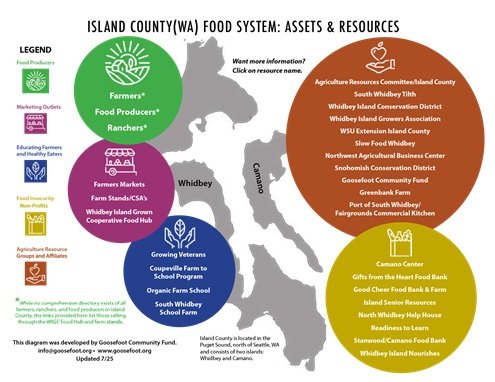
This map identifies food producers, marketing outlets and agriculture resource groups in Island County.
Read more

Do you have helpful information to add? Or perhaps a question you’d like to pose to this community? Use the comment box below.
