
How to get prepared: Earthquake
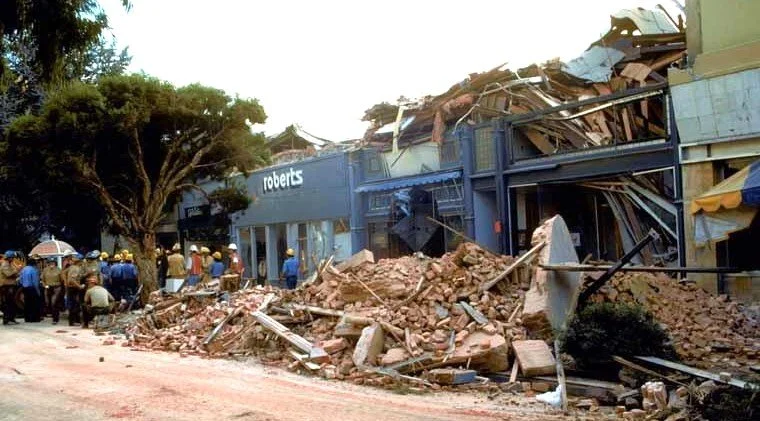
Damage from the 1989 Loma Prieta 6.9-magnitude earthquake. The damage from a 9.0-magnitude earthquake could be much greater.
The Puget Sound sits on geologic faults, both major and minor. Due to the Cascadia Subduction Zone fault offshore, the area experiences a massive earthquake on average every 250 to 400 years. The last one was in January 1700. Such large earthquakes bring huge, widespread destruction, injury and loss of life.
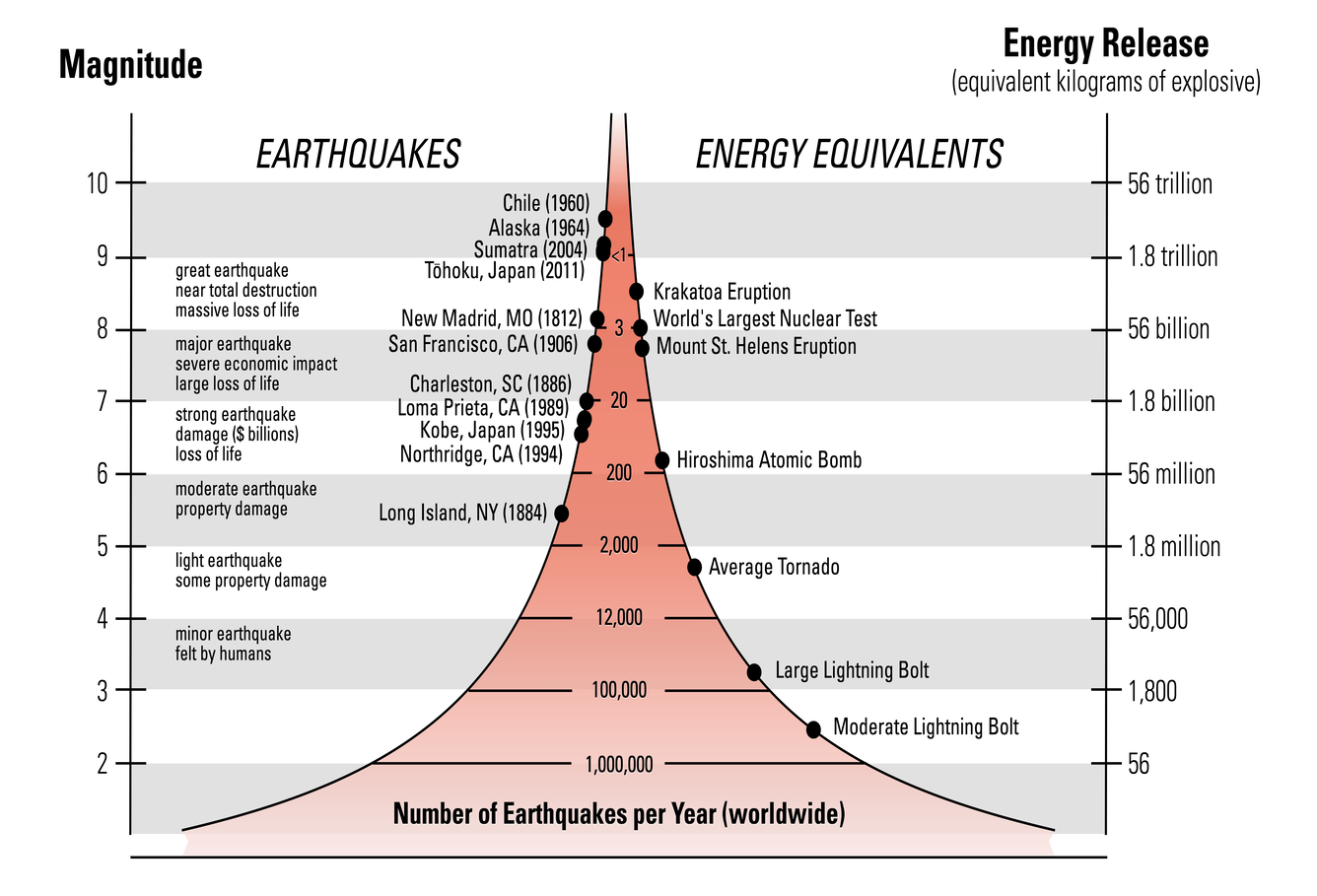
From the US Geological Survey: How our coming Cascadia Subduction Zone fault earthquake of around 9.0 magnitude will compare with other natural events. It will release about 30 times as much energy as the 6.9-magnitude quake in Loma Prieta in 1989 and could be comparable to the Tohoku earthquake in Japan in 2011 that triggered tsunami waves up to 133 feet high.
We can prepare ourselves to reduce injury and damage during earthquakes, whether massive or modest.
Before an earthquake
Prepare before an earthquake! Start by learning how to protect yourself and your family members. Then join with your neighbors to prepare and practice a response for the hours and weeks after an earthquake when we’ll be on our own to help each other and provide for our needs. Finally, you can also reduce many of the earthquake hazards in your home.
Learn and practice how to get through an earthquake
The most important thing you can do is learn how to respond during an earthquake. What you do in an earthquake depends partly on where you are when it happens and what your specific circumstances are. But, in general, the advice is the same: Protect yourself—especially your head and internal organs—from falling and flying objects.
Rehearse this information until you can say with certainty what to do in each situation. Practice the “drop, cover and hold” response with children and extra-vulnerable adults.
Indoors
The best information on earthquake safety recommends that people not run away but instead follow the simple three-step process of dropping, covering, and holding on. Whatever you do, avoid doorways!
Drop: Getting low to the ground on your knees will help you avoid flying glass and will ensure that you don’t get knocked down by the shaking. Bend over to protect your vital organs.
Cover: Because earthquakes send items falling off shelves, knock down furniture and debris, and break windows and other glass objects, you need to cover yourself. Use one arm to cover your head and neck or, better yet, crawl under a nearby sturdy desk or table. The next best option is to crawl to an interior wall away from windows or lie down on the ground next to a solid piece of furniture, like a couch, covering your head with your arm. If you can safely, pull pets under cover as well.
Hold: During an earthquake, buildings, furniture, and walls move a lot, sometimes up and down and sometimes back and forth. If you’re under a solid piece of furniture, use one hand to hold on to it so you don’t get shaken out from under cover.
In a wheelchair or when using an assistive device: If you are in a wheelchair or using a walker when the shaking starts, lock your brake, bend at the waist, cover your head with your arm or something you can grab, and hold on. If you are using a cane, drop, cover, and hold on.
If you’re in bed, stay in bed and cover yourself with blankets and pillows until the shaking stops.
DO NOT use an elevator.
Outside
What if you’re not indoors? Get away from tall things that can fall, such as buildings, trees, utility poles and wires, and street lamps. When the shaking stops, be careful when you move. Stay 30 feet away from downed wires and watch out for road and bridge damage and tall objects that may yet fall.
In a vehicle: If you’re in a vehicle when the shaking starts, pull over. Do your best to stop where you won’t get crushed by tall, falling objects. Set your brake so your vehicle doesn’t roll all over the place. If your vehicle is hit by a power line, don’t get out of the car until a professional can help you unless staying in your car is unsafe.
Watch a video about how to safely exit a car in contact with an energized power line:
Near the coast: Once the shaking has stopped, you need to get to higher ground to avoid a potential tsunami. Follow the tsunami evacuation signs as soon as you can; don’t wait for a siren or other official notification.
When trapped: If you have been covered or blocked by debris and cannot escape, follow these steps:
Do NOT light a match.
Cover your mouth and nose with fabric.
Try not to move, which can kick up dust.
Try not to shout as this can cause you to inhale more dust.
Tap on a pipe or wall to draw attention to your location. Use a whistle if you have one.
Preparing for after the earthquake
Once you have prepared your household for how to respond during an earthquake, prepare a plan and practice how to respond after an earthquake within your household and within your neighborhood. See “After the earthquake” below.
Preparing your home
How vulnerable is your home? The Cascadia Subduction zone was discovered in 1987, but it wasn’t until 2005 that Washington State adopted building codes to reflect the possibility of a really big quake (potentially 9+ magnitude). Island County was already enforcing some of these standards before that, so you may want to request the original architectural or structural plans from the Island County Department of Planning and Community Development. Look specifically for the Structural Engineering Notes or Seismic Design Parameters. A build should have a specified "Lateral Brace Plan" or detailed shear wall layout. If not, your house may not be up to the current standard.
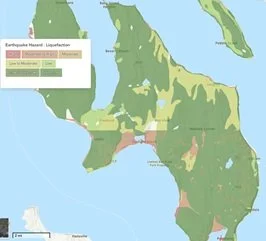
If your home is in a “liquefaction zone” or near a bluff, or on a steep slope, it is more vulnerable. Island County has an interactive map (at right) showing the levels of many types of risk across the county.
You can retrofit a home, which can involve bolting the frame to the foundation, among other things. You may need to hire a local structural engineer for a targeted assessment. The taller and more complex your home, the more vulnerable it is.
Preparing the inside of your home
Analyze your living spaces, thinking about tall, heavy furniture and appliances that could fall in a quake. These include bookcases, refrigerators, stoves, water heaters, washers and dryers. Bolt these to wall studs. Strap your water heater to the wall.
Think about hanging plants in heavy pots that could become missiles.
Large screen televisions are heavy and need to be strapped in.
Don’t have anything heavy hanging over your bed, such as mirrors, glass-covered artwork, bookshelves, etc. Earthquakes can happen while you are sleeping!
If you have a masonry chimney or fireplace, know that they can crumble and fall—they are not safe to be near in a quake.
On shelves, move heavy and breakable items to lower shelves, and consider adding a lip that might hold items in.
Consider putting child-safe latches on cabinets that contain breakables. The items inside might not survive the shaking, but at least their sharp shards and potentially sticky, wet, yucky contents won’t be all over the floor. Also consider latches on cabinets that contain heavy electronics like VCRs and tuners—these can become missiles in a quake.
Consider installing flexible gas supply lines or an automatic shut-off valve to minimize gas leaks that can lead to fires.
Other preparations
Teach every household member how to locate and turn off gas, water and electricity. If a specific tool is necessary to turn off any of these utilities, store it nearby.
Consider getting earthquake insurance, though in a large-scale disaster, if insurance companies are overwhelmed, it may not help much.
Alerts
Apps and phone systems can give an alert that could give you a few seconds warning—enough time perhaps to move away from the danger of falling objects or grab your child or pet and pull them to safety.
Cell phone operating systems: Android and iOS have built-in early earthquake warning alerts.
For Android: Crisis Stories Page: Android early earthquake warnings
For iOS: Government, Emergency, and Enhanced Safety Alerts on iPhone - Apple Support
Apps: Get the MyShake app from the App Store (iOS devices) or Google Play (Android devices). Just a few seconds' warning can mean all the difference to your safety and that of your loved ones.
After an earthquake
After big quakes, there will be aftershocks, which probably won’t be as big as the initial shock, but which can be very strong and can cause more damage and more falling objects. Take this into consideration as you deal with the aftermath. After the shaking stops, you need to pay attention to four main concerns:
Dealing with injuries
Preventing further injury
Ensuring the place you are is safe
Communications
Addressing injuries
The main injuries you need to deal with right away are bleeding injuries and cardiac arrest/not breathing. Sign up for CPR/AED and ”Stop the Bleed” training so you will know what to do in these events.
If you have a life-threatening injury or have come across someone who does, you need to get help. 911 will probably be nonfunctional or overwhelmed. If you’re part of the South Whidbey Prepares program, reach out to neighbors for help with the injury. Your neighborhood will contact the Healthcare Prepares Working Group to see if extra help is available.
Preventing further injury
Many injuries happen right after the earthquake when people cut themselves on broken glass, injure themselves on sharp or heavy objects, or are struck by falling and flying objects during aftershocks. Put on your hard hat, gloves, sturdy shoes and safety goggles if they are accessible and move with caution.
House safety considerations
As soon as you are able, turn off your propane to prevent fire.
Turn off your water to prevent flooding and, if your pipes have broken, to keep the water in your water heater tank safe from contaminants.
If wiring is damaged, turn off electrical power.
Inspect for structural damage. Remember that there are likely to be aftershocks. What is partly damaged may collapse.
If the building is unsafe, evacuate.
Clean up spilled chemicals that could be ingested by pets or that are flammable.
Check sewer lines before using the toilet.
Communication
Activate your neighborhood communication plan. If cell phones are working, reach out via text to your out-of-state contact to give them your status.
Turn on your emergency radio to listen for information.
Post your OK/Help sign on the front door or a nearby window to inform your neighbors of your status.
If your neighborhood has a phone tree, and phones are working, check in on your neighbors, or walk your neighborhood to check on others if you are able and can do so safely.
Learn more

Let’s talk
Do you have helpful information to add? Or perhaps a question you’d like to pose to this community? Use the comment box below.